

Through strategic legal content marketing, solo practitioners can turn silent conversion leaks into high-value consultations. The referrals were still happening. The true failure point was occurring immediately after the referral was made.
1. Opening Hook: The Invisible Leak in the Legal Referral Pipeline
The attorney assumed the firm’s primary problem was a lack of incoming referrals.
For seven years, the practice had survived on traditional word-of-mouth networks, professional handoffs, and local reputation. However, over a consecutive eight-month period, the volume of inbound consultation requests dropped significantly, despite colleagues insisting they were still passing the attorney’s name along to prospective clients.
The referrals were still happening. The true failure point was occurring immediately after the referral was made.
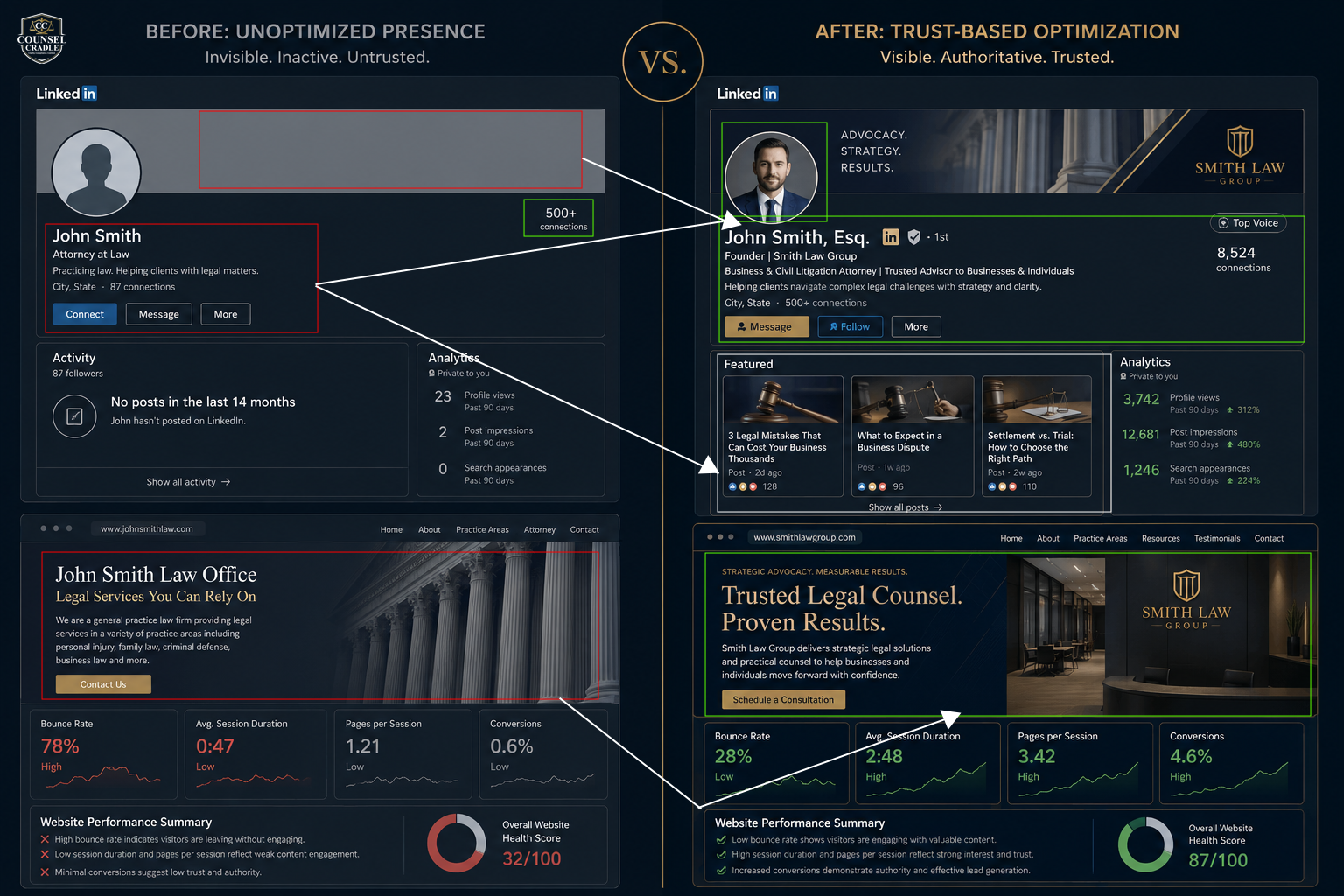
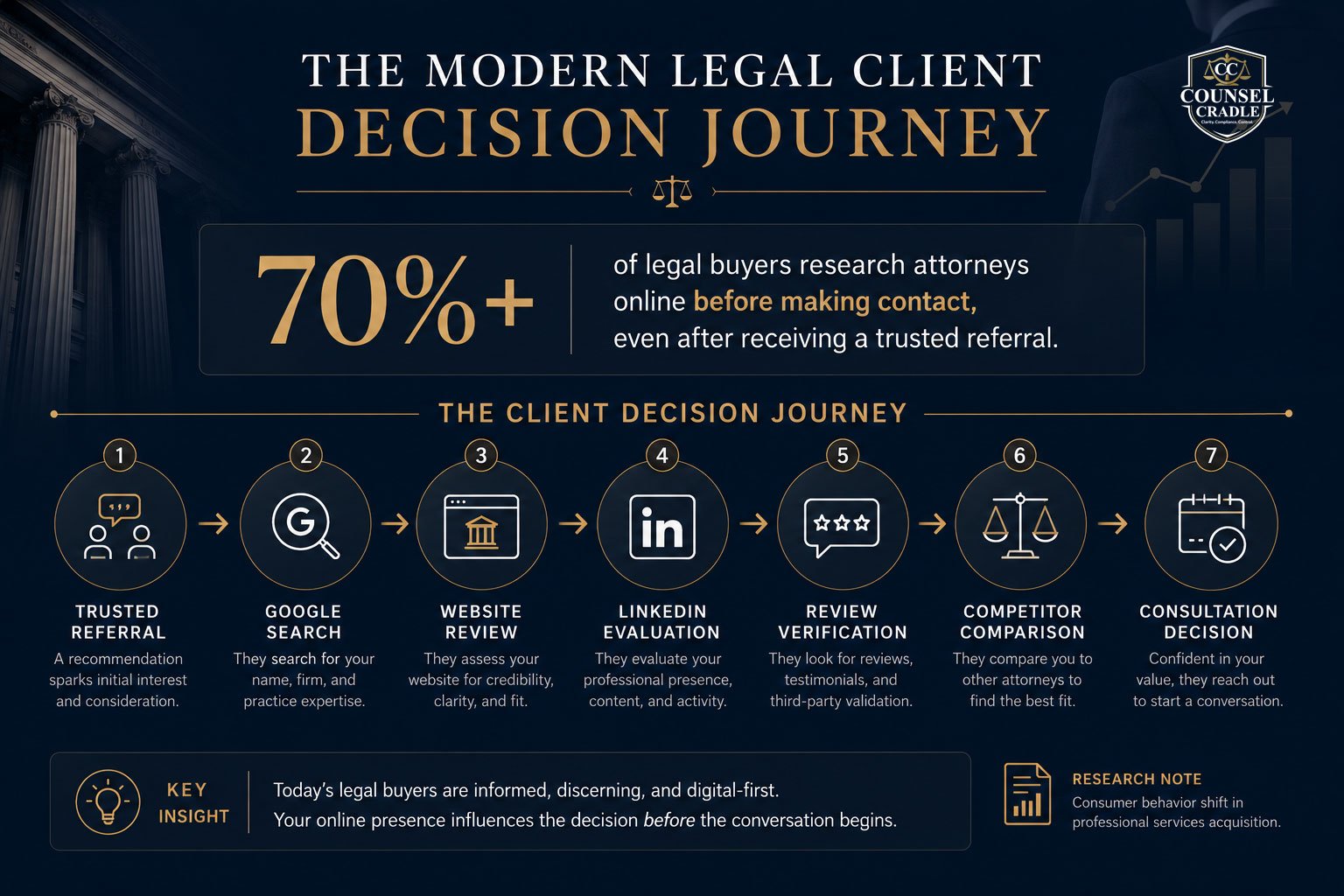
Before picking up the phone or submitting a website contact form, modern legal consumers conduct a subconscious, hyper-specific research phase: the invisible credibility audit. Prospects were receiving the attorney’s name, opening Google or LinkedIn to research their digital presence, and quietly walking away. Because an inactive, outdated, or generic online profile signals institutional stagnation, prospects were choosing competitors who actively demonstrated visible authority.
The firm did not have a lead generation problem; it had a digital trust gap that was actively filtering out premium, high-value cases.
2. Client Background & Market Context
To fully understand the strategic changes required, it is necessary to examine the operational realities of the practice:
- Practice Area: High-stakes civil litigation and estate planning for business owners.
- Geographic Market: A highly competitive, tier-1 metropolitan area where mid-sized firms aggressively outspend solo practitioners on paid search engine marketing (PPC) and billboard advertising.
- Firm Size: Solo practitioner supported by one part-time legal assistant.
- Market History: 12 years in practice, relying entirely on a legacy network of former clients and local professional associations.
- Prior Marketing Attempts: The attorney had previously paid a generic agency $2,500 per month for automated, non-specific blog posts (“3 Reasons You Need a Will”) and generic graphic templates on social media. This yielded a 0% conversion rate and was canceled after six months due to a total lack of brand differentiation.
Why Traditional Referral Marketing Started Breaking Down
Relying entirely on a closed referral ecosystem is highly risky in a modernized legal market. When a peer refers a client to a solo practice, that referral acts as an introduction—not a closed contract.
When a premium prospect is dealing with high financial or personal stakes, they remain inherently risk-averse. They look for external signals to validate the referral. If your digital footprint looks like a neglected digital business card while a competing local firm publishes highly clear, authoritative breakdowns of complex legal issues, the prospect will choose the competitor nearly every time. The issue was never the attorney’s objective legal skill; the issue was that their deep expertise was entirely invisible online.
3. Why High-Value Prospects Were Quietly Disqualifying the Firm
Premium legal consumers—such as business owners, real estate developers, and high-net-worth individuals—behave differently than volume-based legal clients. They review multiple practitioners, assess content depth, and analyze thought leadership long before reaching out to an intake coordinator.
During our diagnostic phase, we identified three core vulnerabilities that caused high-value prospects to look elsewhere:
A. The Subconscious Credibility Audit
When a prospect searched for the attorney’s name or firm, they encountered a digital footprint that failed to reflect their premium pricing. The firm’s digital ecosystem fell short across several key trust metrics:
- Professionalism: The visual presentation looked dated and misaligned with high-stakes litigation.
- Consistency: Long gaps between updates suggested a lack of administrative control.
- Authority: Content lacked deep intellectual substance and relied heavily on superficial legal platitudes.
- Relevance: The messaging did not directly speak to the shifting regulatory and economic realities facing business owners.
B. Signs of Low Digital Trust
The firm’s digital presence suffered from distinct warning signs that trigger immediate prospect friction:
- Automated, cookie-cutter articles that reads like generic legal textbook entries rather than practical legal counsel.
- A LinkedIn profile that listed job titles but failed to showcase case outcomes, methodologies, or specialized focus areas.
- An unmonitored Google Business Profile with no recent client-centric updates or localized authority signals.
- A complete absence of clear, educational answers to the complex questions premium clients look for during their initial research phase.
C. Why This Disproportionately Harms Premium Cases
A client with a low-stakes traffic ticket might choose an attorney based on convenience or the lowest price. A client with an asset protection or high-value litigation matter is highly sensitive to risk. They look for specific legal communication styles, case handling philosophies, and intellectual transparency. If your digital channels are silent, you force the prospect to make an assumptions about your capabilities. In a competitive market, a lack of clear information is always interpreted as a risk factor.
[HUMAN ELEMENT: THE ATTORNEY’S PERSPECTIVE]
“I was winning multi-million dollar judgments in court, but online I looked completely invisible. It was deeply frustrating to watch less experienced attorneys secure premium retainers simply because they maintained an active digital presence while I was working late on weekends relying entirely on word-of-mouth.”
4. The Hidden Revenue Damage Most Solo Attorneys Never Measure
The danger of an invisible conversion leak is that it leaves no paper trail. Prospects do not email a firm to explain why they chose a competitor; they simply close the tab and move on.
When a solo firm lacks an authoritative digital presence, it triggers a cascade of compounding strategic disadvantages:
- The Multiplier Effect of Competitor Activity: Every week a qualified attorney remains inactive online, their active competitors gather digital equity. As competitors regularly publish high-value breakdowns of local legal changes, they claim the definitive authority position in the minds of local referral sources and prospects alike.
- The Decay of Legacy Referral Networks: Traditional referral networks naturally degrade over time as older colleagues retire, relocate, or scale back their practices. If a solo firm fails to build a modern, scalable digital trust asset to capture new market share, its intake volume will inevitably decline alongside its legacy network.
- The Downstream Margin Crush: When digital trust signals are weak, a firm loses its premium pricing power. The only inquiries that make it through the funnel are highly price-sensitive prospects who view legal services as a generic commodity, forcing the attorney into unsustainable price wars.
5. The Real Problem Wasn’t Traffic—It Was Trust Architecture
To reverse this decline, we had to reject generic agency solutions. The solution was not to purchase expensive paid ads, buy unverified lead lists, or try to go viral with non-professional social media content.
The firm did not need an influx of random traffic. It needed to systematically fix its Trust Architecture.
We implemented a framework designed to transform the firm’s digital footprint from a passive resume into an active authority asset. This system consists of five core pillars:
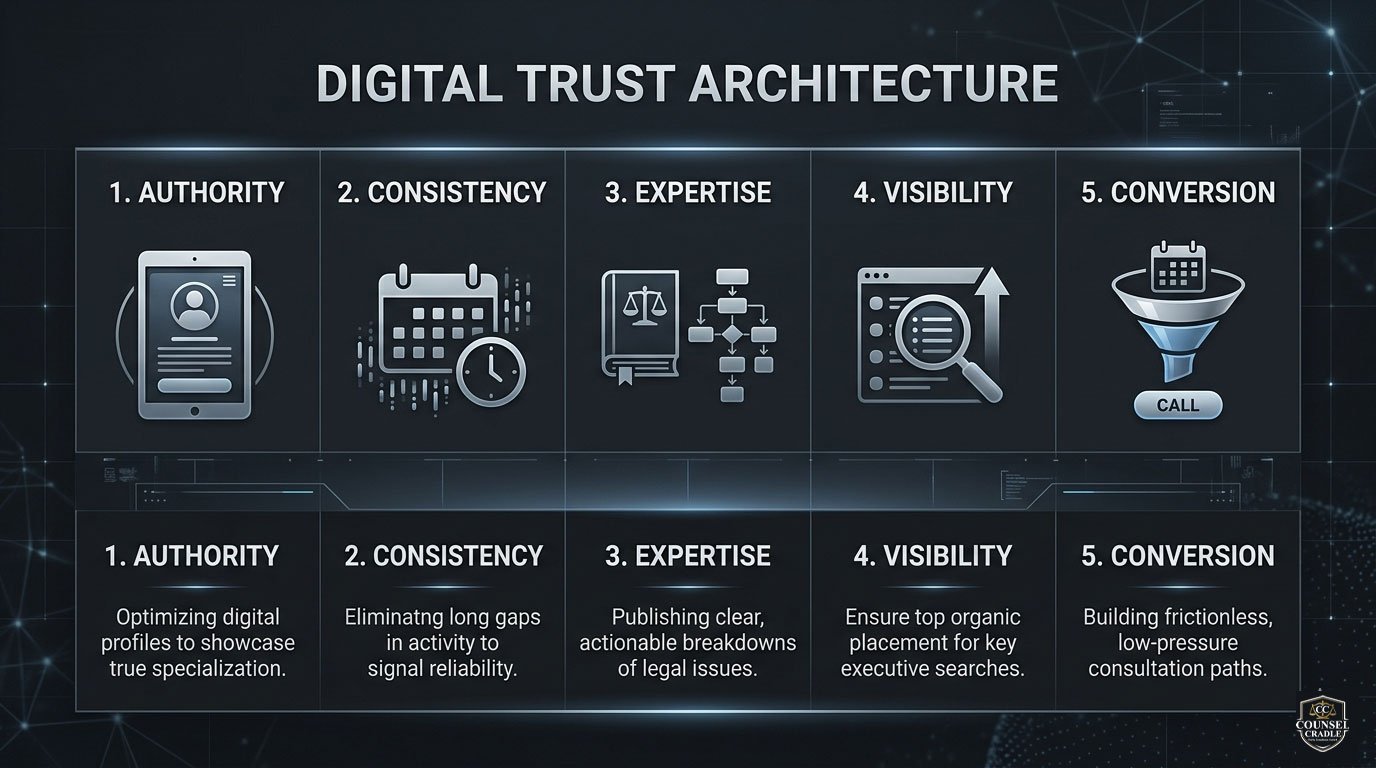
By deploying this framework across the firm’s primary digital touchpoints, we removed the friction points that were causing referred prospects to drop out of the funnel.
6. The Exact Workflow Used to Rebuild Digital Trust
The transformation was executed over a 120-day operational roadmap, broken down into five highly structured technical phases.
Phase 1: Market Positioning & Trust-Gap Audit
We began with a comprehensive diagnostic audit of the firm’s digital reputation compared to its top three direct regional competitors.
- Search Sentiment Analysis: We mapped exactly what a prospect saw when searching the attorney’s name after receiving a referral. We discovered that search results pulled up outdated corporate registry filings rather than high-value content.
- Friction Mapping: We evaluated the user journey from the initial profile click to the final consultation booking page, identifying three critical areas where complex, long forms were causing prospects to leave.
Phase 2: Attorney Brand Reconstruction
We redesigned the attorney’s professional profiles—focusing heavily on LinkedIn as the primary hub for business-owner client acquisition—transforming them from generic chronological resumes into authoritative resources.
- Headline Restructuring: Replaced generic text (“Partner at X Law Firm”) with clear, positioning statement: “Defending business owners in high-stakes commercial disputes and structural asset protection.”
- The Professional Summary: Rewrote the profile bio using a clear narrative structure that outlines the attorney’s core litigation framework, past case victories, and exact types of commercial clients served.
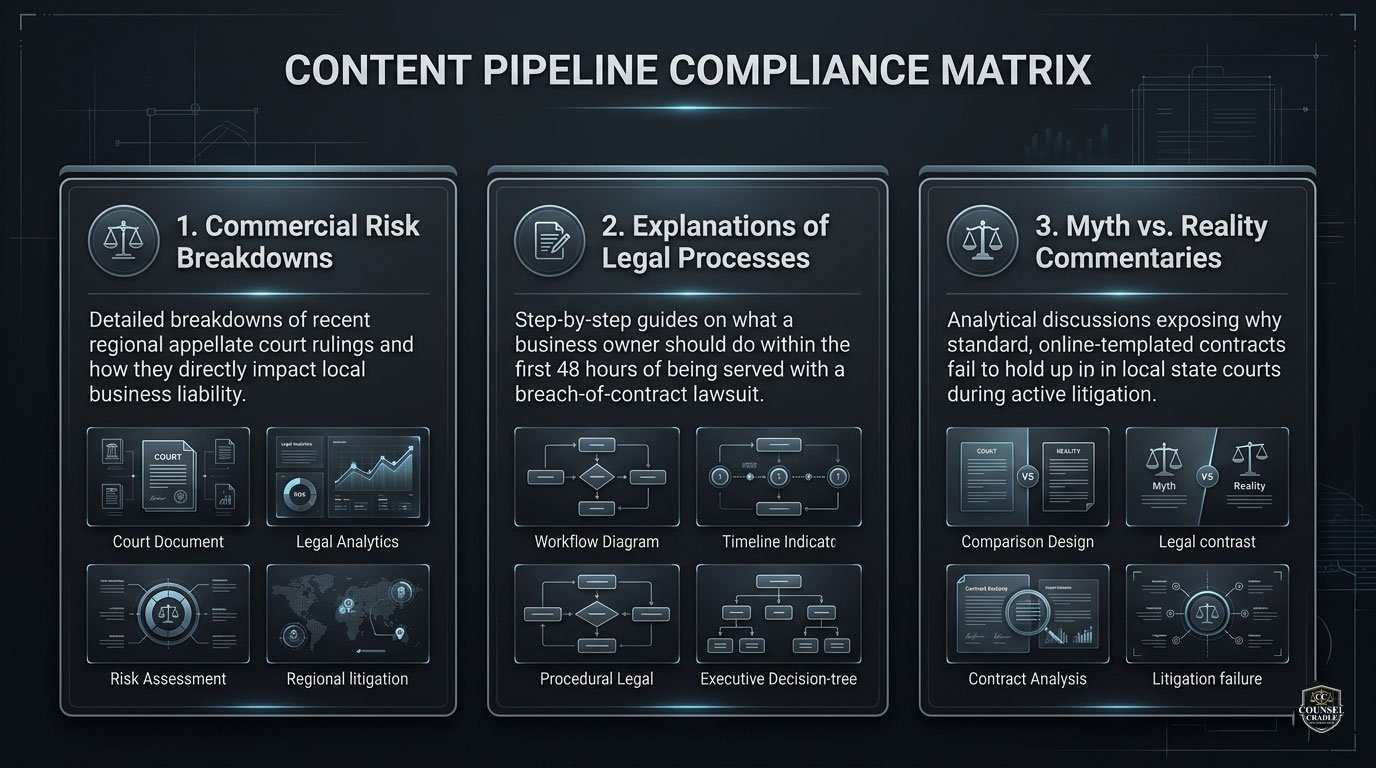
Phase 3: The Deep-Value Legal Content System
We replaced generic, automated articles with deep-dive, insights-driven educational content. Every piece of content was designed to demonstrate actual legal expertise. We established three primary content themes:
Phase 4: Multi-Platform Synchronization
To maximize the value of this new content, we built a highly efficient syndication workflow. A single deep-dive insight was adapted and published across the firm’s primary professional channels:
- LinkedIn: Configured for executive long-form text posts and PDF case breakdowns.
- Google Business Profile: Managed via weekly updates featuring localized legal case studies, ensuring prominent placement in local maps searches.
- Firm Website: Maintained as a clean, centralized digital knowledge base where prospects can read comprehensive whitepapers.
Phase 5: Consultation Conversion Optimization
We stripped away all unnecessary friction from the intake process. The consultation booking page was overhauled to feature clear, trust-building design elements:
- A simplified scheduling tool embedded directly on the page, allowing prospects to book a discovery call instantly.
- A brief, pre-qualification intake process that asked intentional, high-value questions about the matter, filtering out low-tier or unvetted inquiries.
- Clear copy highlighting the firm’s strict confidentiality protocols right at the point of booking, maximizing initial trust.
7. What Technology and Content Systems Alone Couldn’t Fix
Building an authoritative marketing system requires more than just launching new software or setting up a content calendar. The true bottleneck for most solo attorneys is execution and consistency.
[E-E-A-T INSERT: INTAKE OPTIMIZATION REVIEWS]
Operational Observation: Content assets can successfully generate inbound interest, but sustainable conversion requires a responsive human intake process. Realigning internal administrative workflows to follow up on inquiries within 4 hours was critical to preventing lead decay.
The primary transformation was not just operational; it was psychological. By outsourcing the management and systematic deployment of their Digital Trust Architecture, the attorney eliminated the mental burden of content production. They no longer had to balance writing high-quality briefs with figuring out what to post online to maintain visibility.
With a consistent, professional digital presence actively validating their authority, the attorney reported a significant shift in initial client conversations. Prospects were showing up to consultation calls already convinced of the firm’s expertise, entirely changing the dynamic from a skeptical interview into a collaborative legal strategy session.
8. The Results After 120 Days: Measurable Transformation
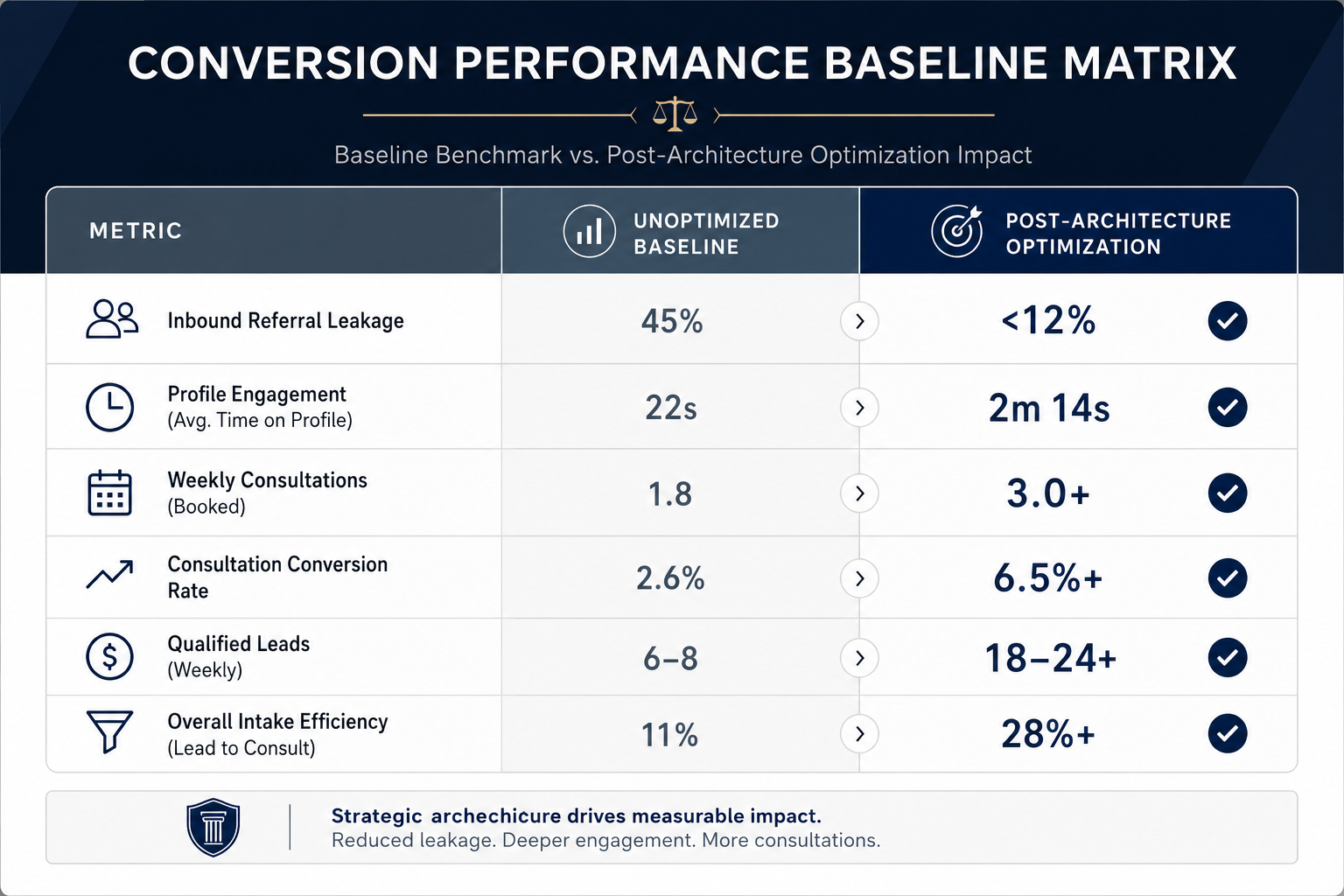
By avoiding paid ad spend and focusing entirely on fixing the underlying trust architecture, the firm achieved substantial, quantifiable growth across all key performance metrics within four months:
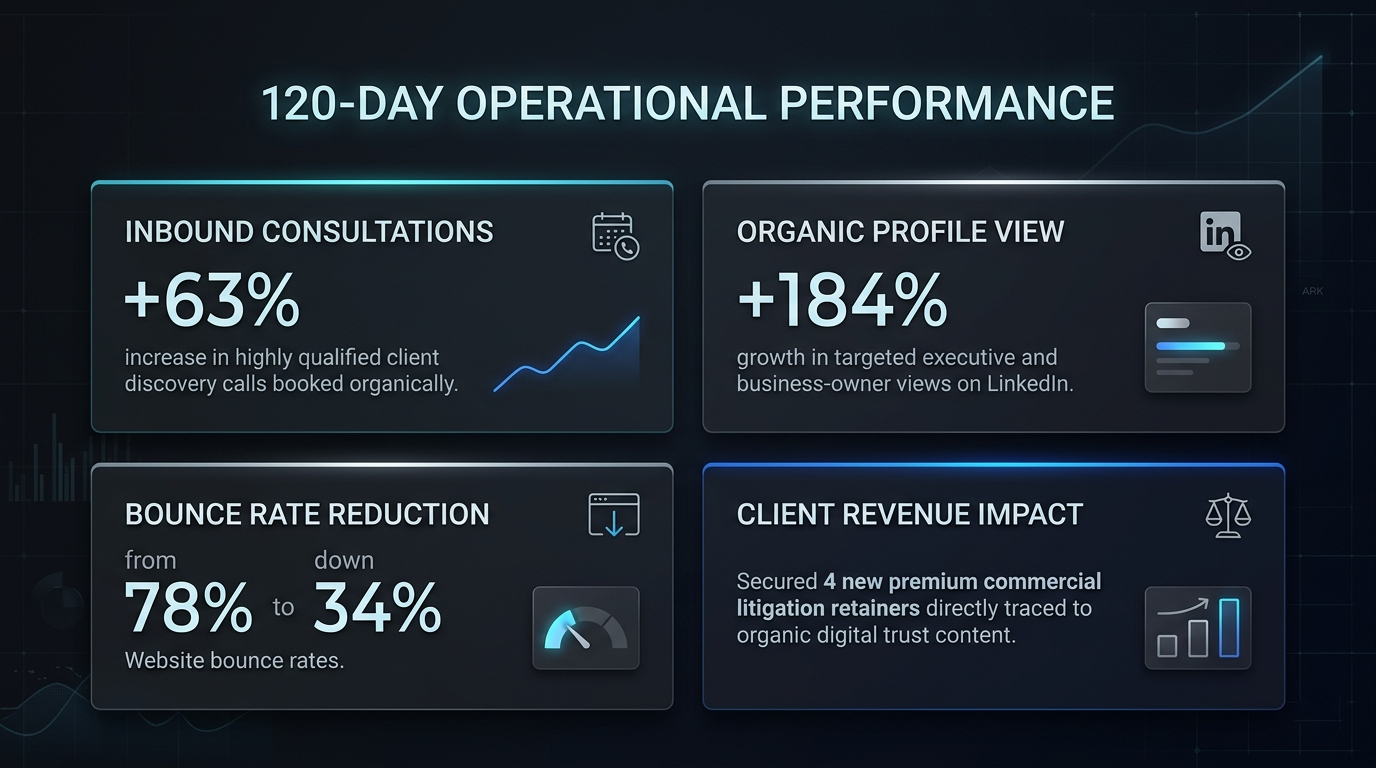
The financial return on investment was immediate. By optimizing their existing referral traffic and closing the hidden conversion leak, the firm generated a consistent pipeline of high-value cases without adding any recurring paid advertising costs to their monthly overhead.
9. Strategic Takeaways for Solo Law Firms
For solo practitioners operating in competitive legal markets, this case study offers several critical operational insights:
- Referrals Require Digital Validation: A personal recommendation is no longer the final step in a client’s decision-making process. Modern legal buyers will validate your reputation online before they ever reach out to book a consultation.
- Substance Outperforms Virality: Solo law firms do not need massive follower counts, superficial metrics, or trendy video content. Premium clients value clear, deep-dive legal intelligence and long-term professional consistency.
- Consistency Architecture Compounds: A cohesive digital presence across your website, LinkedIn, and Google Business Profile builds a self-reinforcing authority asset that continues to capture market share long after it is established.
10. Want to Build a Trust-Driven Client Acquisition System for Your Law Firm?
If your solo practice has a strong track record of success in the courtroom but your digital presence looks inactive or generic, you are likely losing high-value clients to competitors with better online positioning.
We specialize in designing and managing customized, highly professional Digital Trust Architectures tailored specifically for elite solo practitioners and specialized boutique law firms. We handle the strategy, content creation, and multi-platform optimization so you can maintain total focus on handling your cases.